Area 1 | A World Divided
1.1
A New Threat
The fall of the Berlin Wall in November 1989 astonished the world. For almost 30 years, the fortified border system built by communist East Germany to prevent its citizens from going West had divided the country. The Wall had come to symbolize the global ideological conflict—the divided world of the Cold War—in which the terrifying destructiveness of nuclear weapons cast a shadow over the daily lives of people almost everywhere.
The devastating potential of these new explosives entered public consciousness on August 6 and 9, 1945, three months after the end of World War II in Europe, when the United States dropped two atomic bombs on Japan. These nuclear blasts devastated the cities of Hiroshima and Nagasaki and killed tens of thousands of civilians through incineration and radiation poisoning.
The destruction of Hiroshima and Nagasaki ended World War II in the Pacific. But the bomb was unleashed upon a world facing the beginnings of new confrontation: the Cold War rivalry between the United States and the Soviet Union. Soon, both nations were engaged in an arms race for ever more numerous and powerful nuclear weapons.
1.2
A Global Cold War
The bitter rivalry between the two superpowers after World War II was animated by two opposing world views. Each side believed it had found the best way to organize modern society for all humankind. Central to the United States’ view were ideas about individual freedom, liberal democracy, the rule of law, private property, and market economy. By contrast, the Soviet Union, emerging from the Russian Revolution of 1917, believed that emphasis on the collective, state ownership of the means of production, and the leadership of the Communist Party were critical to achieve the common good.
As the leading allies during World War II, both countries had set aside their differences to defeat Germany and, from the summer of 1945, Japan. After the war, the rivalry resurfaced. Both sides tried to win the hearts and minds of people around the world by developing powerful narratives around their core ideals. These also played an important role in fostering loyalty, mobilization and consensus at home.
What made the Cold War confrontation between the United States and the Soviet Union so dangerous was a nuclear arms race. A few years after the US atomic bombing of Japan, the Soviets successfully tested their own atomic bomb. Both sides competed in developing ever-more powerful nuclear weapons, conducting over 2,000 nuclear tests between 1945 and 1963. By the 1950s, Soviet and Western leaders began to recognize that nuclear war could destroy the planet. But each side feared a surprise attack by the other and prepared to survive and win a nuclear war, dramatically expanding their arsenals of nuclear-tipped missiles and delivery vehicles. Within a decade, each side was capable of delivering a devastating blow to the other.
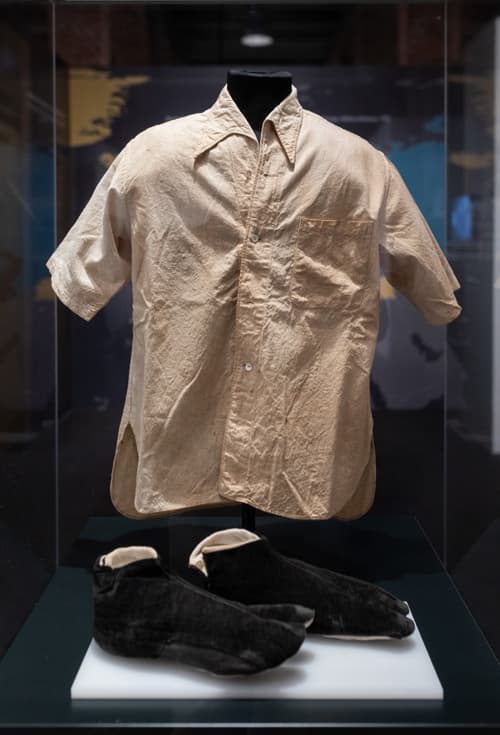
The Daigo Fukuryū Maru incident
In March 1954, the United States tested a new kind of nuclear weapon, a hydrogen bomb, on Bikini Atoll. It turned out to be far more powerful than anticipated and, due to weather conditions, spread radioactive debris in an area far wider than expected. A Japanese fishing boat, the Daigo Fukuryū Maru, was caught in the fallout and covered with radioactive dust. By the time the ship returned to harbor, most of the 23 crew were ill; one died later that year. This event, which also affected other crews and led to most of that year’s tuna harvest being destroyed, provoked a global anti-nuclear movement. By August 1955, 30 million Japanese had signed a petition against further tests, joined by millions of signatories worldwide.
AlliiertenMuseum, Berlin